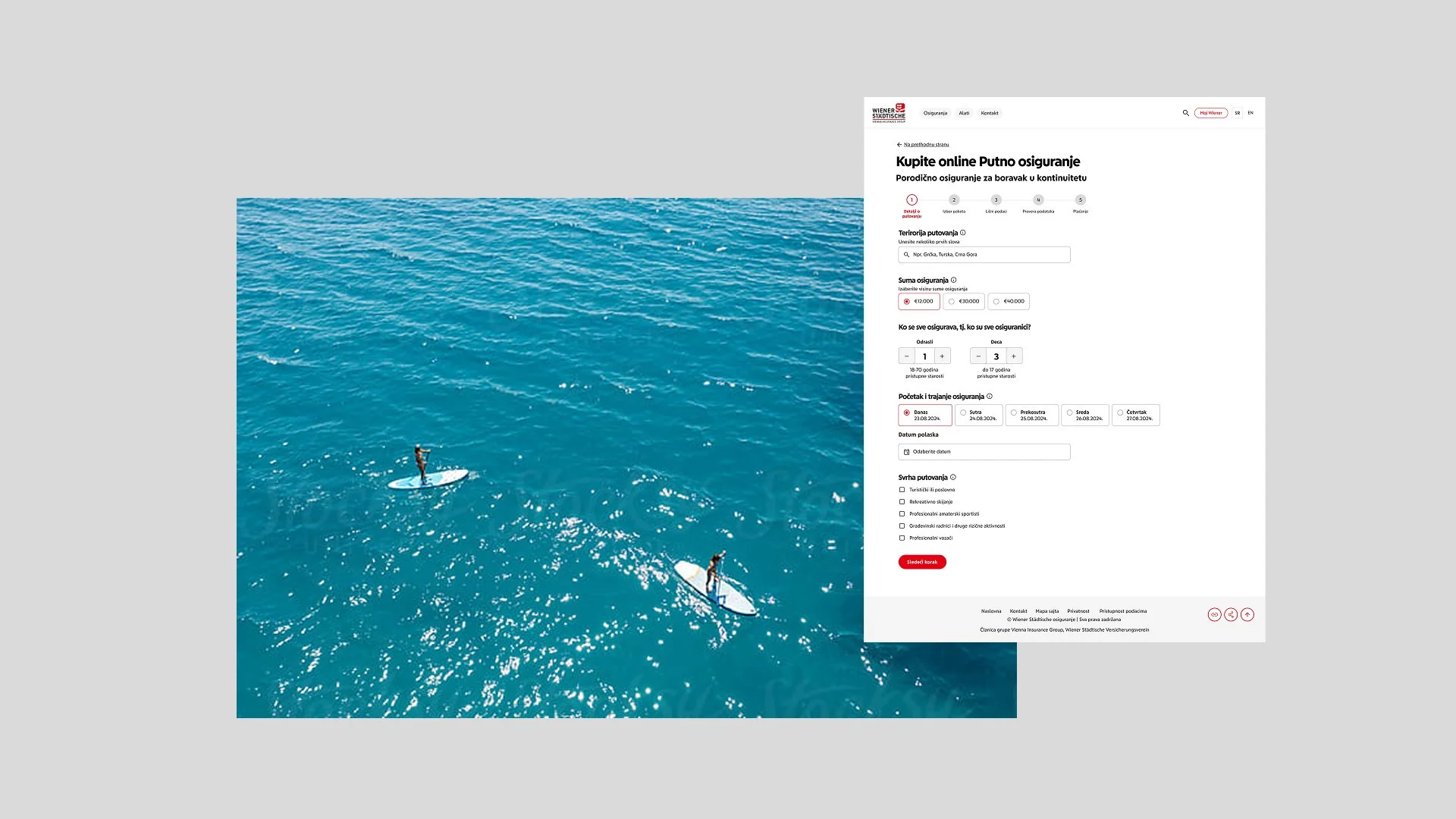
Wiener Städtische osiguranje

Website Redesign

INITIAL STATE

Wiener Städtische osiguranje, the Serbian representative of the prestigious Austrian insurance group, had established a strong presence in the Serbian market offering comprehensive insurance services—from life and health insurance to property, vehicle, and business coverage. However, their digital presence hadn't evolved with their market position. The website suffered from fundamental usability issues that created friction between users and the information they needed.

The existing site presented a fragmented user experience with disjointed sections that felt like separate microsites rather than a cohesive platform. Navigation was unnecessarily complex, forcing users through multiple layers to reach basic information about insurance products. Content was buried under lengthy, jargon-heavy text that overwhelmed rather than informed. The visual presentation compounded these problems—outdated design language, images and icons that weren't optimized for retina displays, and a mobile experience that felt like an afterthought despite having responsive templates. For an insurance company where trust and credibility are paramount, the dated interface undermined the professionalism and reliability that Wiener Städtische embodied in their actual service delivery.

THE ASK

The company needed a complete website redesign that would modernize their digital presence while making insurance information genuinely accessible to Serbian consumers and businesses. The challenge was organizing a vast product portfolio—spanning individual consumer insurance across health, life, property, vehicles, and travel, plus comprehensive business insurance solutions—into an interface that helped users find relevant coverage without getting lost in complexity.

The redesign needed to address specific technical shortcomings: implement true mobile-first architecture (not just responsive adaptation of desktop layouts), optimize all visual assets for modern high-resolution displays, streamline navigation to reduce clicks to information, and restructure content to be scannable rather than overwhelming. Beyond these functional requirements, the design needed to bridge the existing Vienna Insurance Group brand guidelines while introducing contemporary visual language that would resonate with the Serbian market. My role encompassed complete UX and UI design, establishing information architecture, content strategy, and visual design system.

SOLUTION & DESIGN APPROACH

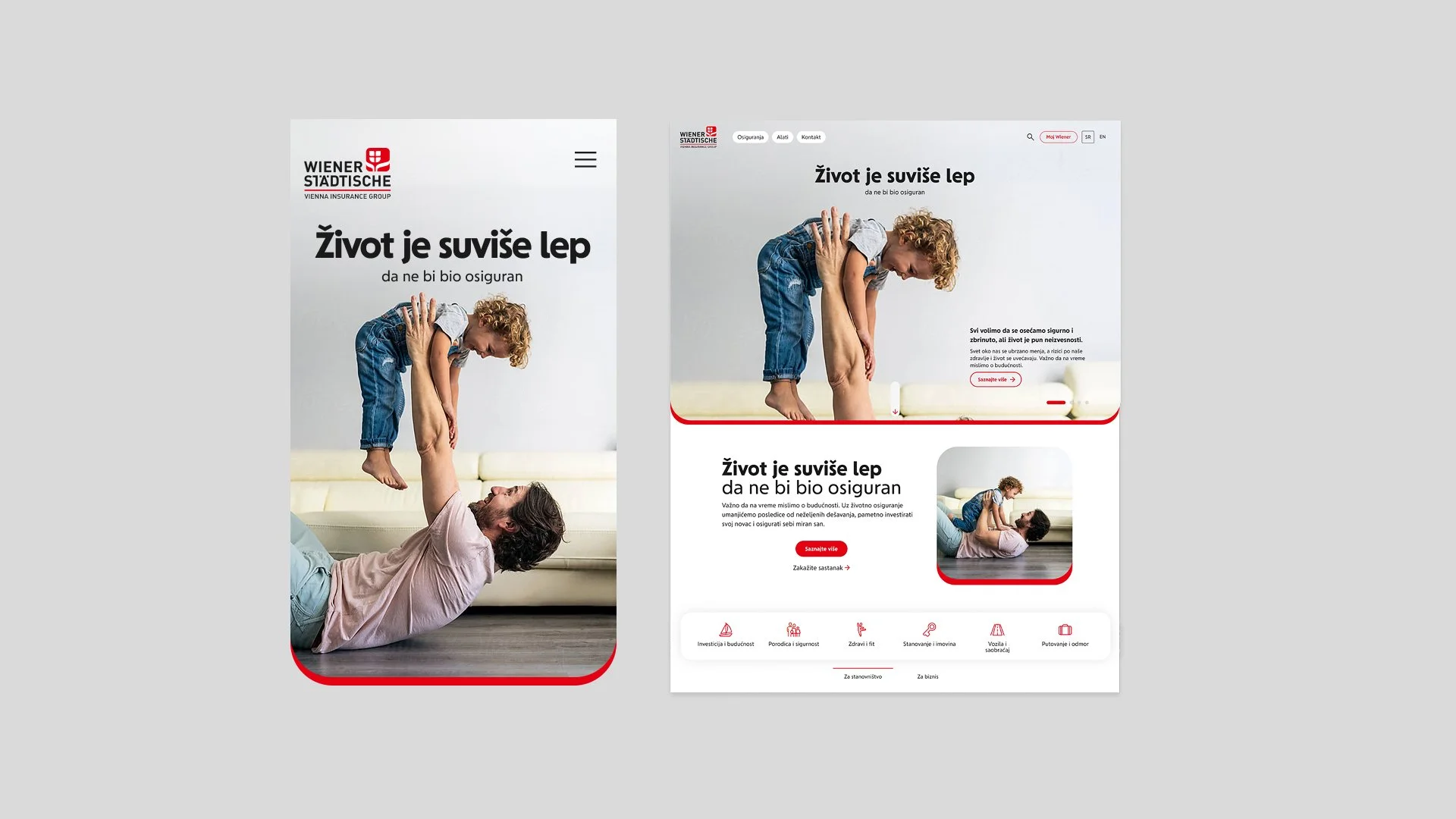
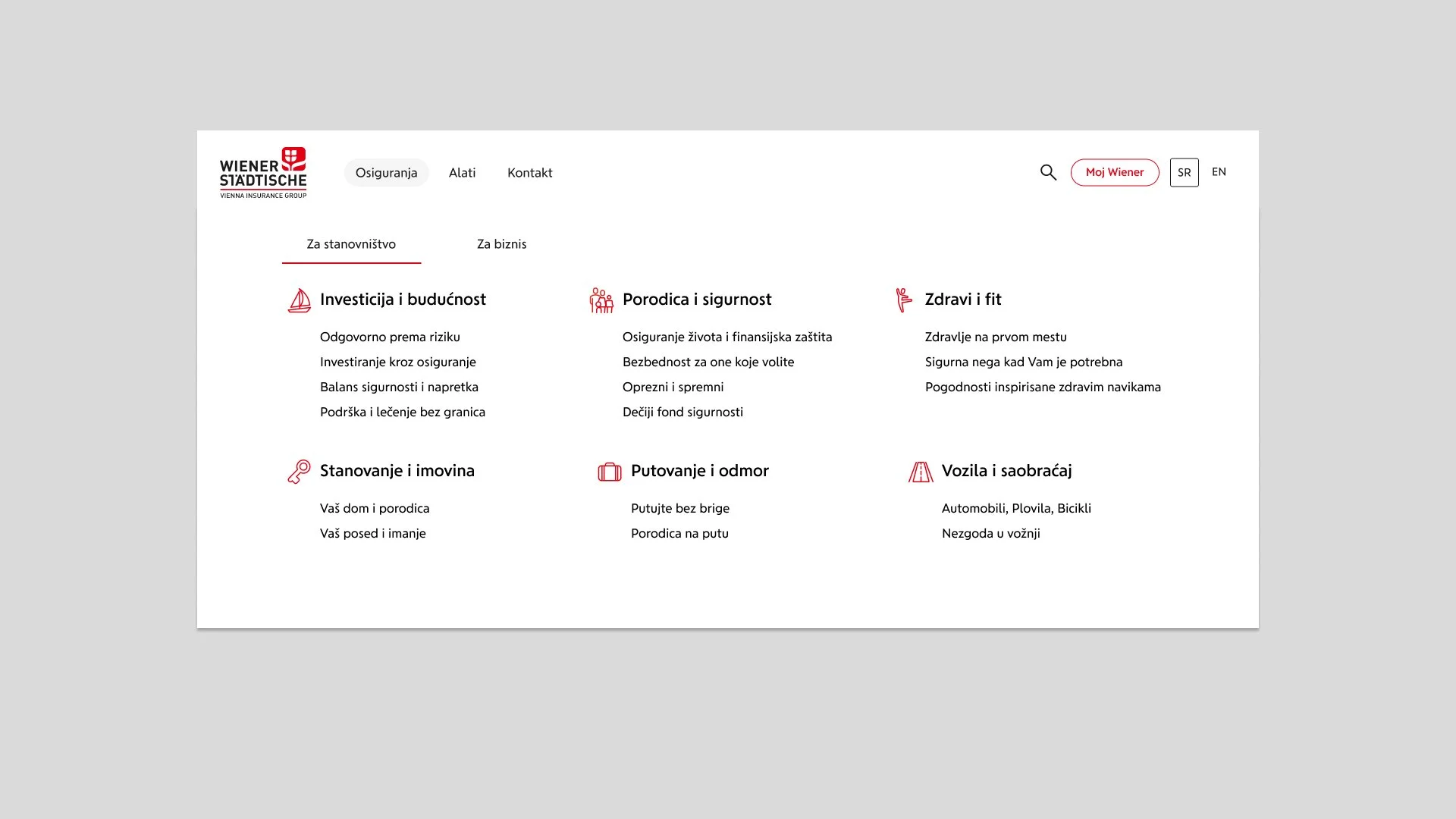
I restructured the site around two primary user paths: individual consumers ("Za stanovništvo") and business clients ("Za biznis"). This fundamental split immediately reduced cognitive load by showing users only the insurance categories relevant to their needs. Within each path, products were organized by life context rather than insurance industry terminology—categories like "Healthy and Fit," "Home and Property," "Driving and Travel" speak to actual user needs rather than policy types.

Navigation became dramatically simpler through a mega-menu structure that reveals the full product hierarchy in a single interaction. Users can scan all offerings at once rather than clicking through nested menus hoping to find the right product. Each insurance product received a dedicated landing page with consistent structure: clear value proposition, practical coverage details, transparent pricing information, and immediate call-to-action for quotes or purchases. Content was radically shortened and restructured—long paragraphs became concise benefit statements, technical jargon transformed into plain language, and key information surfaced prominently rather than buried mid-page.

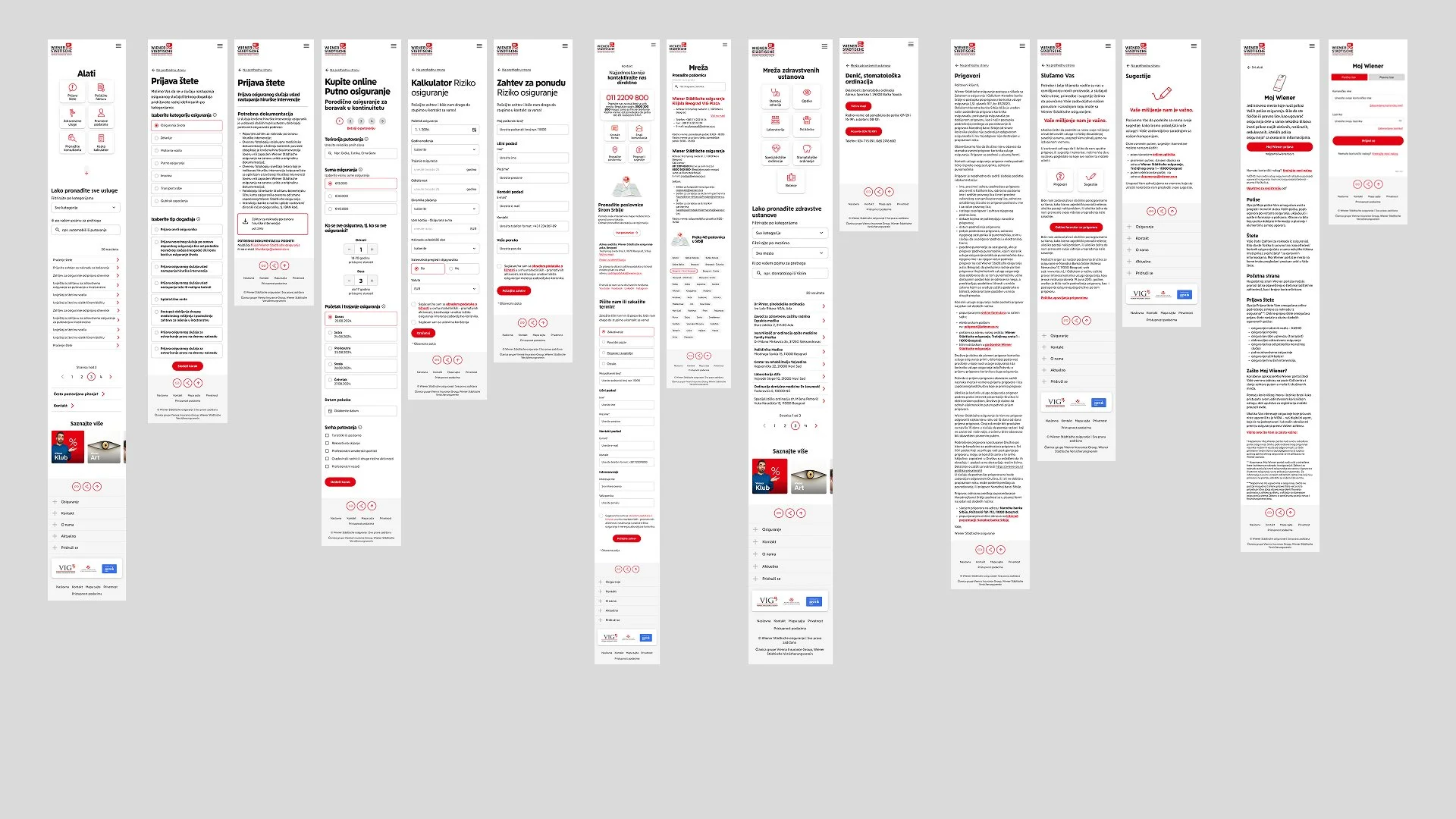
The mobile-first approach meant designing for small screens as the primary experience, then progressively enhancing for larger viewports. This reversed the previous desktop-centric thinking and ensured the majority of users accessing via smartphones received an optimized experience. Touch targets became generously sized, forms simplified for mobile input, and critical actions remained accessible without excessive scrolling or hunting.

For the visual identity, I introduced a clean sans-serif typography system that balanced the institutional credibility Vienna Insurance Group brand required with the approachable clarity the Serbian market expected. The color palette extended the core brand colors while adding warmth and accessibility. All photography and iconography was recreated at retina resolution, ensuring crisp display across all modern devices. The visual language leaned toward clarity and breathing room—generous whitespace, clear hierarchy, and focused content blocks that didn't overwhelm.

One significant challenge emerged around photography direction. My initial proposal favored bolder, more emotionally resonant imagery that connected insurance protection to real life moments—families, homes, travel, health—creating aspirational yet relatable scenarios. The client ultimately chose a more conservative photographic direction, preferring safer, more literal product representation. While this wasn't my recommended approach, it reflected their organizational comfort level and risk tolerance. The final implementation used these more conservative images within the modern interface structure I'd designed.

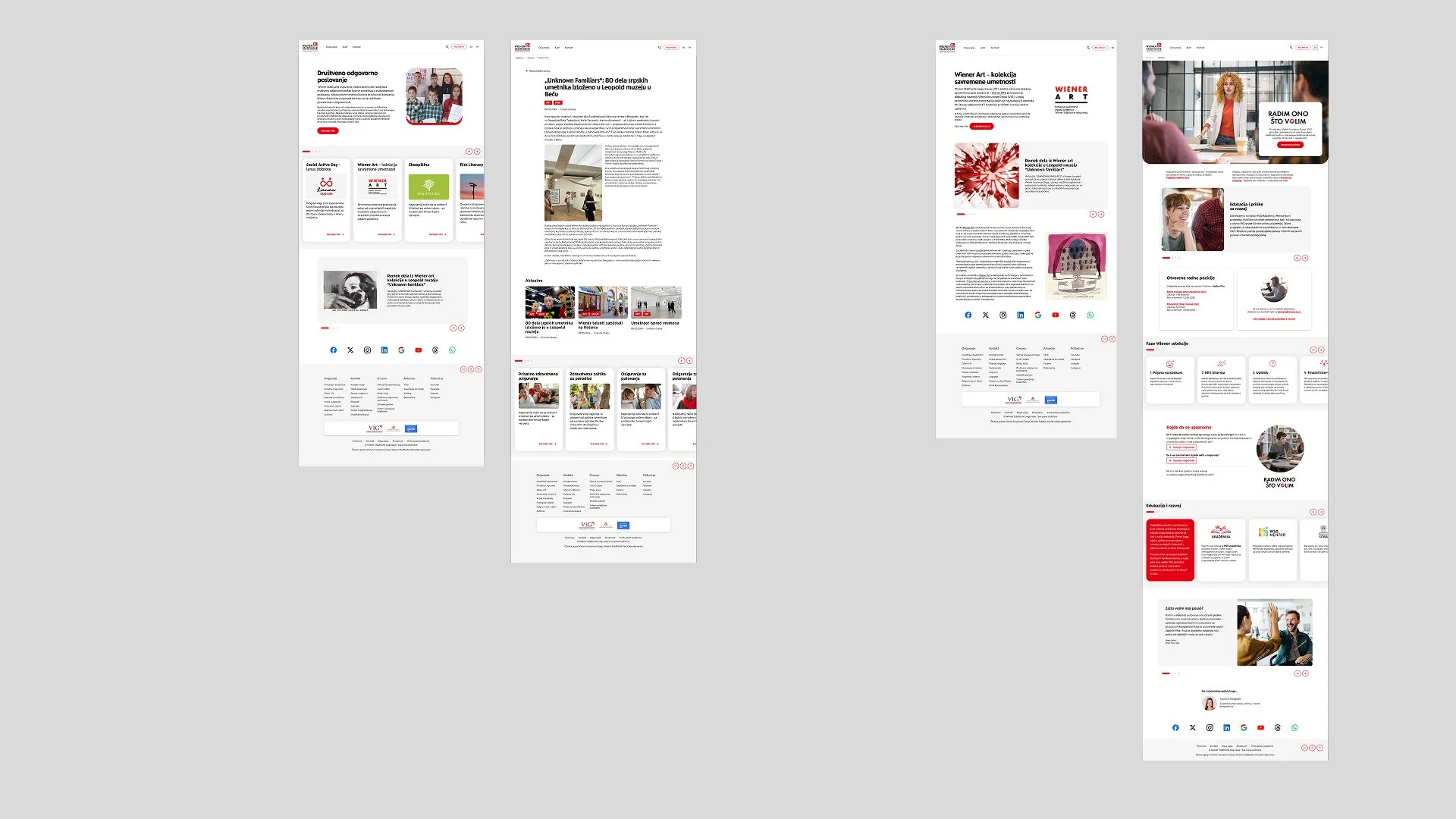
The site architecture integrated key functional elements beyond product information: the Moj Wiener portal for policy management, direct webshop access for online insurance purchases, comprehensive service sections for claims reporting and customer support, and content sections including news, social responsibility initiatives, and the Wiener art collection. These elements transformed the site from pure marketing into a functional service hub where existing customers could manage their insurance alongside prospective customers researching coverage options.

OUTCOMES & REFLECTION

I restructured the site around two primary user paths: individual consumers ("Za stanovništvo") and business clients ("Za biznis"). This fundamental split immediately reduced cognitive load by showing users only the insurance categories relevant to their needs. Within each path, products were organized by life context rather than insurance industry terminology—categories like "Healthy and Fit," "Home and Property," "Driving and Travel" speak to actual user needs rather than policy types.

Navigation became dramatically simpler through a mega-menu structure that reveals the full product hierarchy in a single interaction. Users can scan all offerings at once rather than clicking through nested menus hoping to find the right product. Each insurance product received a dedicated landing page with consistent structure: clear value proposition, practical coverage details, transparent pricing information, and immediate call-to-action for quotes or purchases. Content was radically shortened and restructured—long paragraphs became concise benefit statements, technical jargon transformed into plain language, and key information surfaced prominently rather than buried mid-page.

The mobile-first approach meant designing for small screens as the primary experience, then progressively enhancing for larger viewports. This reversed the previous desktop-centric thinking and ensured the majority of users accessing via smartphones received an optimized experience. Touch targets became generously sized, forms simplified for mobile input, and critical actions remained accessible without excessive scrolling or hunting.

For the visual identity, I introduced a clean sans-serif typography system that balanced the institutional credibility Vienna Insurance Group brand required with the approachable clarity the Serbian market expected. The color palette extended the core brand colors while adding warmth and accessibility. All photography and iconography was recreated at retina resolution, ensuring crisp display across all modern devices. The visual language leaned toward clarity and breathing room—generous whitespace, clear hierarchy, and focused content blocks that didn't overwhelm.

One significant challenge emerged around photography direction. My initial proposal favored bolder, more emotionally resonant imagery that connected insurance protection to real life moments—families, homes, travel, health—creating aspirational yet relatable scenarios. The client ultimately chose a more conservative photographic direction, preferring safer, more literal product representation. While this wasn't my recommended approach, it reflected their organizational comfort level and risk tolerance. The final implementation used these more conservative images within the modern interface structure I'd designed.

The site architecture integrated key functional elements beyond product information: the Moj Wiener portal for policy management, direct webshop access for online insurance purchases, comprehensive service sections for claims reporting and customer support, and content sections including news, social responsibility initiatives, and the Wiener art collection. These elements transformed the site from pure marketing into a functional service hub where existing customers could manage their insurance alongside prospective customers researching coverage options.

The redesigned Wiener Städtische website delivers a modern, accessible platform that finally matches the professionalism and market position the company holds in Serbia. Users can now find insurance information quickly through intuitive navigation and clear product organization. The mobile-first architecture ensures seamless experience across devices, addressing the reality that most Serbian users access the site from smartphones. Visual quality across all assets meets contemporary standards with retina-optimized imagery and clean, professional design language.

The project reinforced important lessons about design decision-making in corporate contexts. The photography direction compromise—while different from my recommendation—highlighted how organizational culture and risk perception shape final outcomes. Sometimes the optimal design solution isn't the one that gets implemented because stakeholder comfort and brand caution outweigh pure design considerations. The key is creating a flexible enough system that can accommodate these variations while maintaining overall quality. The underlying architecture and interface design remained strong enough that more conservative imagery didn't undermine the fundamental usability improvements.

The successful elements—navigation restructuring, content simplification, mobile-first implementation, visual asset quality—demonstrate how thoughtful UX and UI work can transform complex service websites into accessible, functional platforms that serve both business goals and user needs. The site now provides a solid foundation that can evolve over time, whether that means bolder imagery in future iterations or new functional capabilities as digital insurance services continue to develop in the Serbian market.

Previous
Previous

Tickets.rs

Next
Next

Finyoz