Performance Prediction Tool
Redesigning a legacy hydrostatic transmission calculator
for modern engineering workflows - Danfoss Pcubed
THE ASK
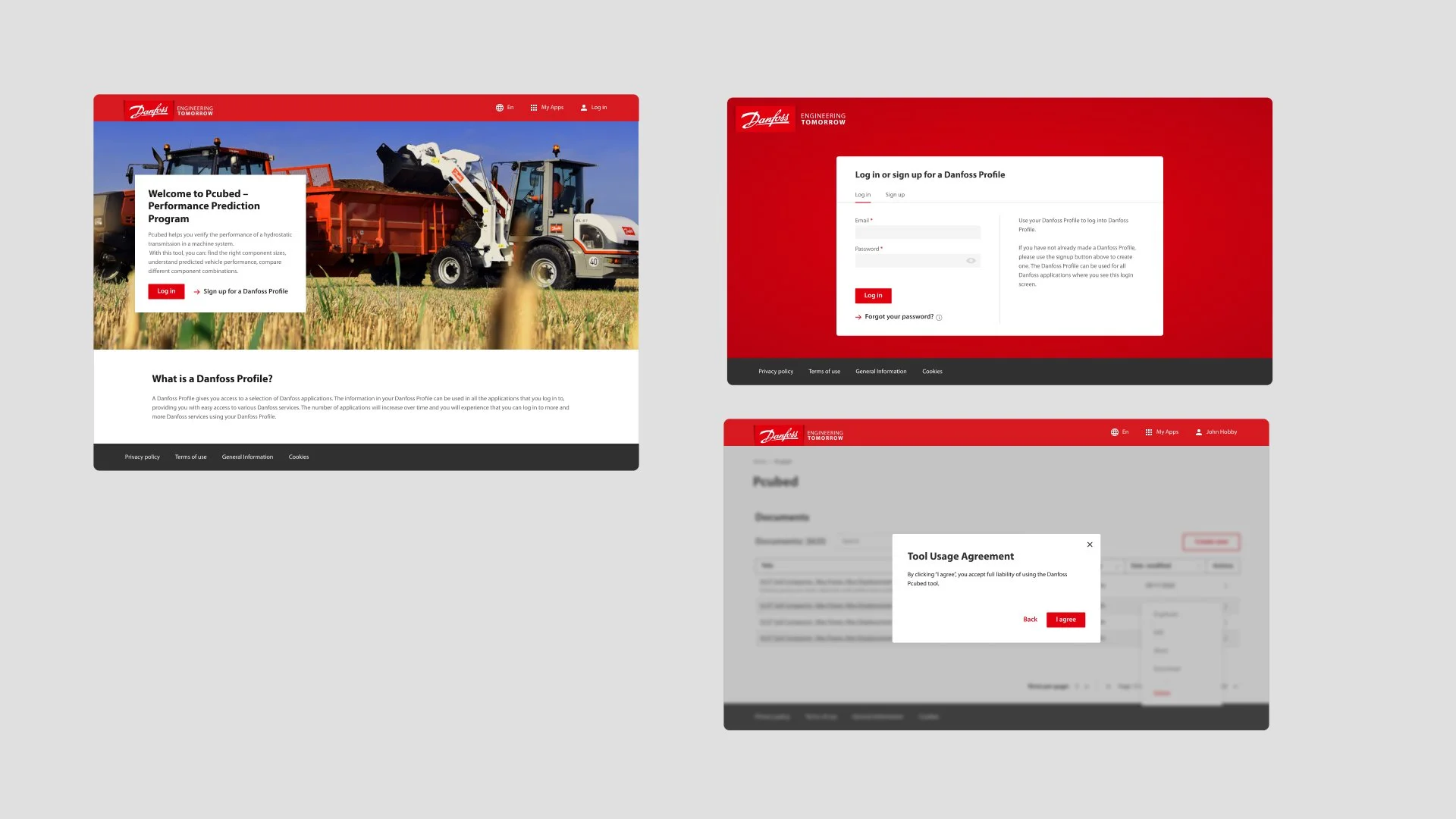
Danfoss Pcubed is a specialized engineering tool that helps engineers verify the performance of hydrostatic transmission systems in heavy machinery—from soil compactors to agricultural equipment. Engineers use the tool to input pump and motor specifications, define operating conditions across multiple cases, and receive detailed performance predictions including power consumption, vehicle speed, tractive force, and system efficiency under various load scenarios.
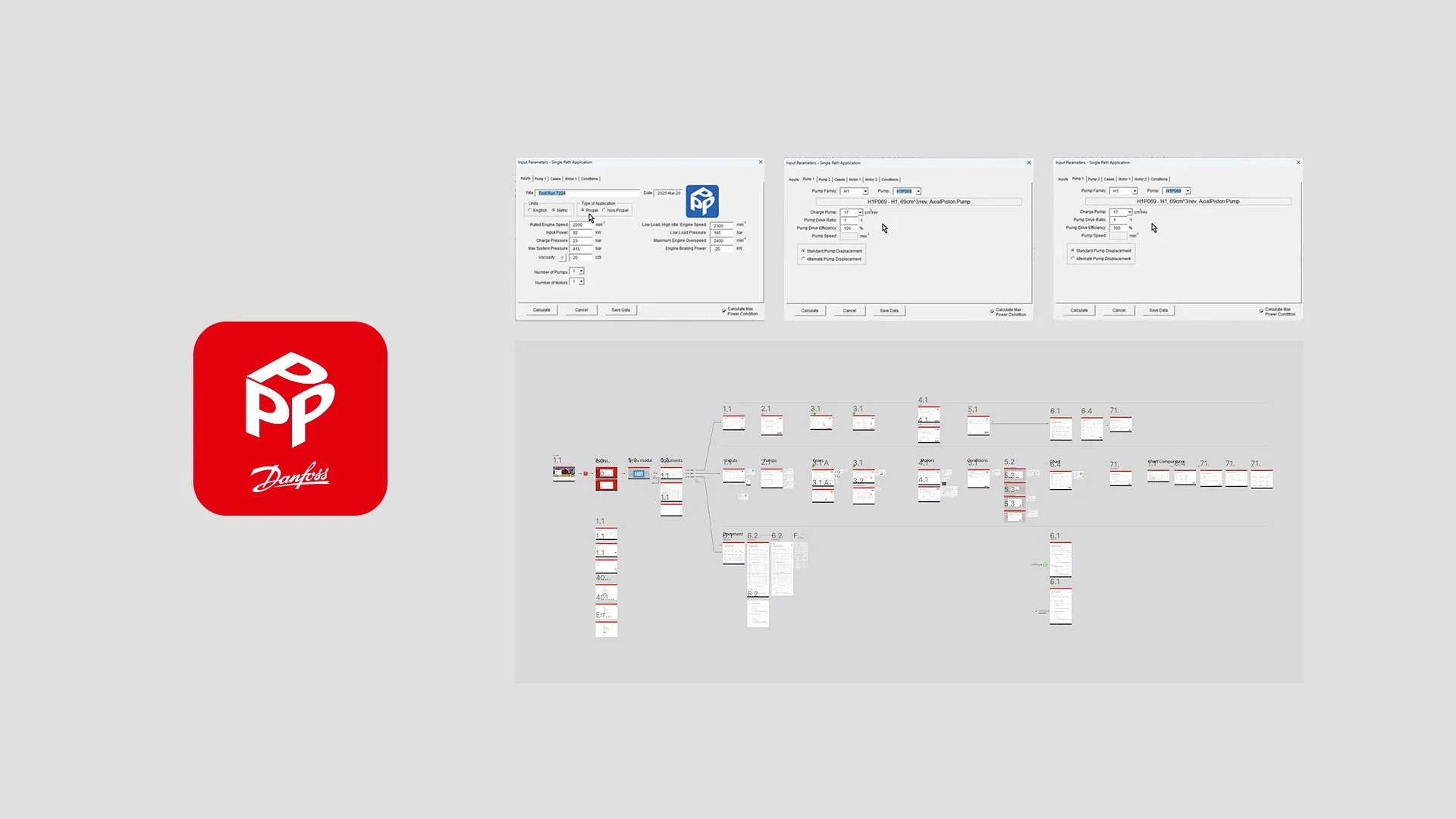
The existing application was functional but built on an outdated interface that hadn't evolved with Danfoss's modern design system. Engineers faced a complex, dense interface that made configuring multi-case performance scenarios unnecessarily difficult. The tool required a complete visual redesign that would maintain all technical functionality while aligning with Danfoss's current "Engineering Tomorrow" brand identity and improving workflow efficiency for daily engineering use.
THE SOLUTION
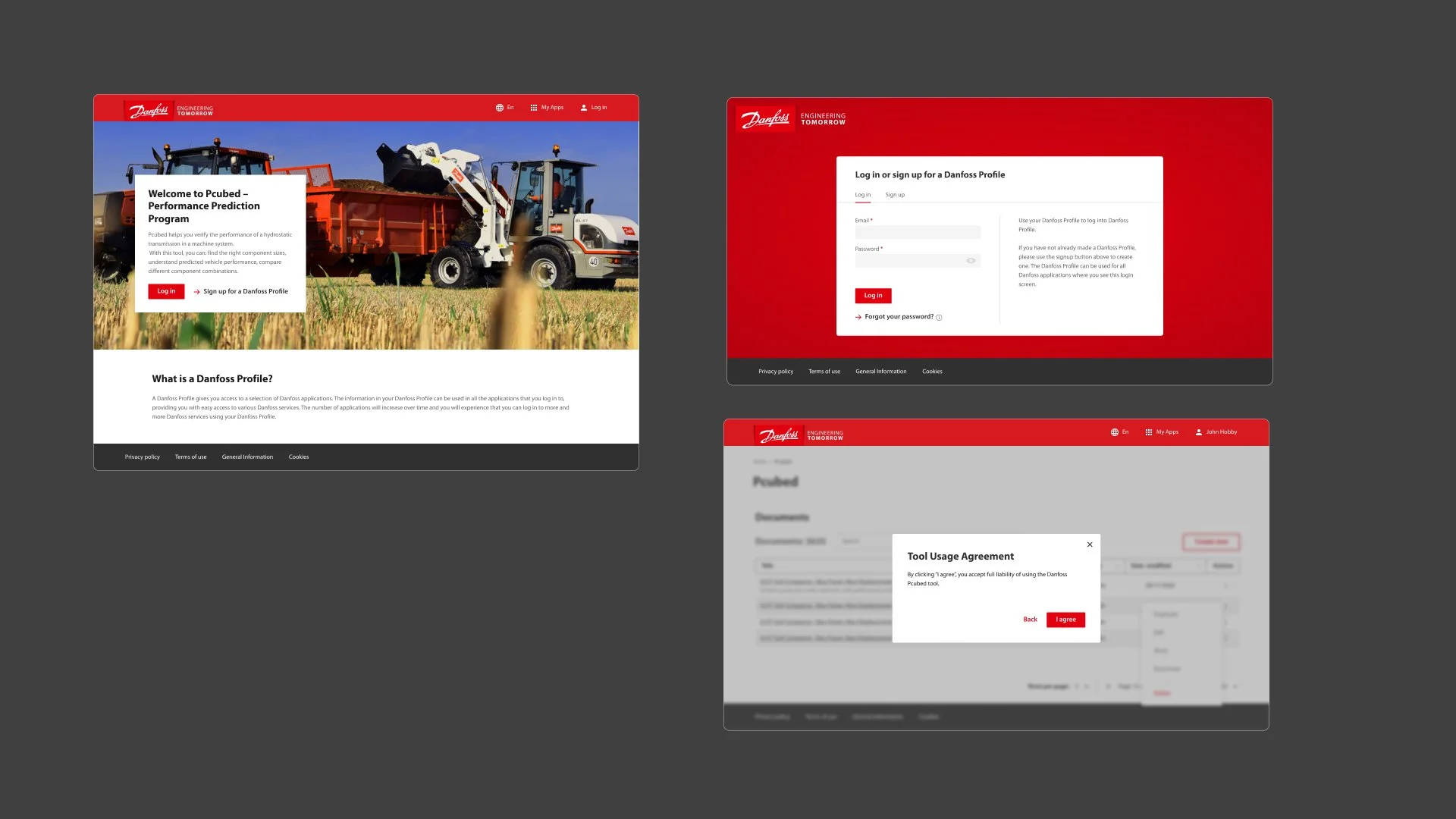
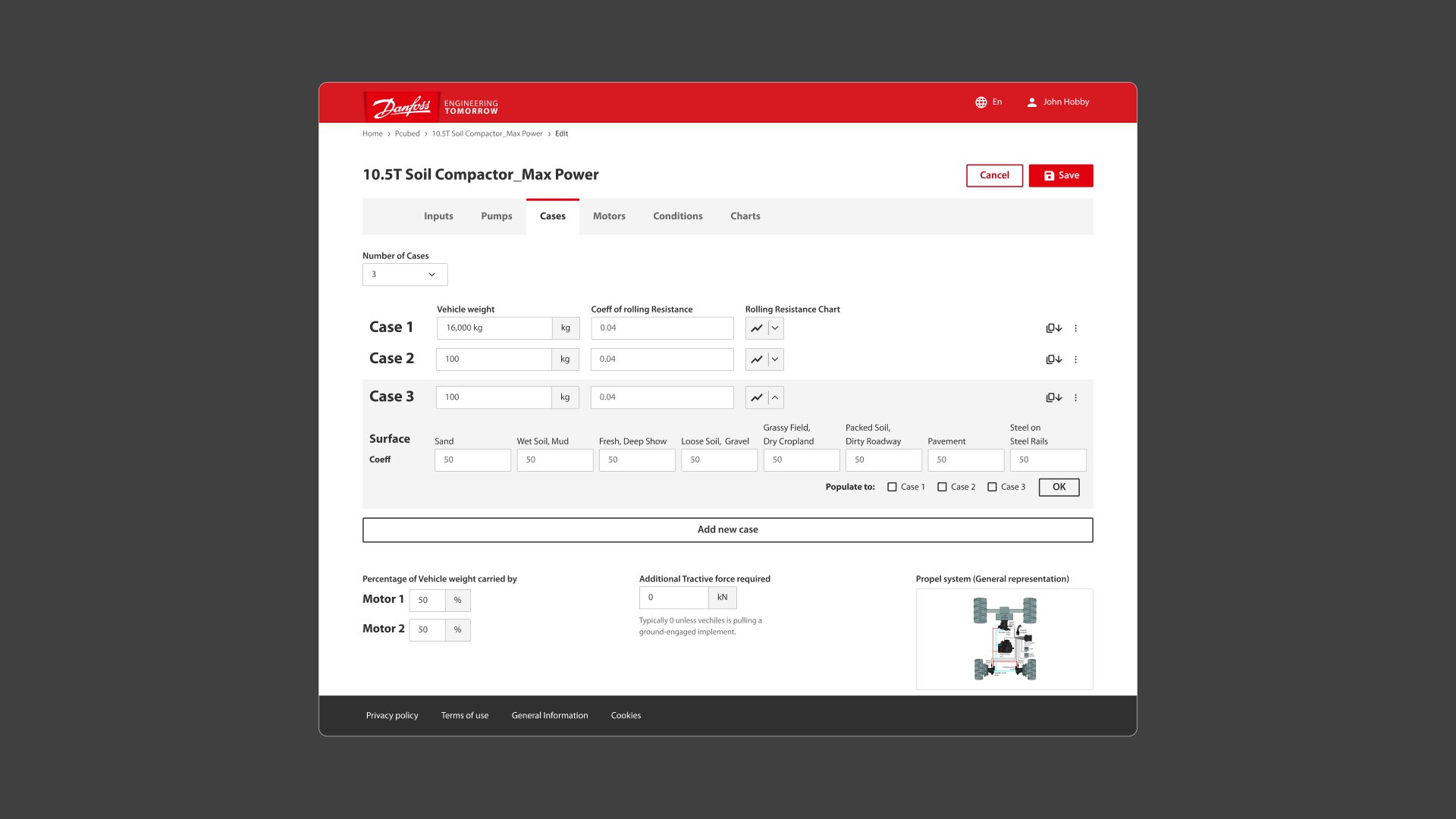
I redesigned Pcubed within Danfoss's established design system, transforming the legacy interface into a clean, modern application that maintains technical precision while dramatically improving usability. The iconic Danfoss red became the primary action color throughout, creating visual consistency with the broader Danfoss product ecosystem.
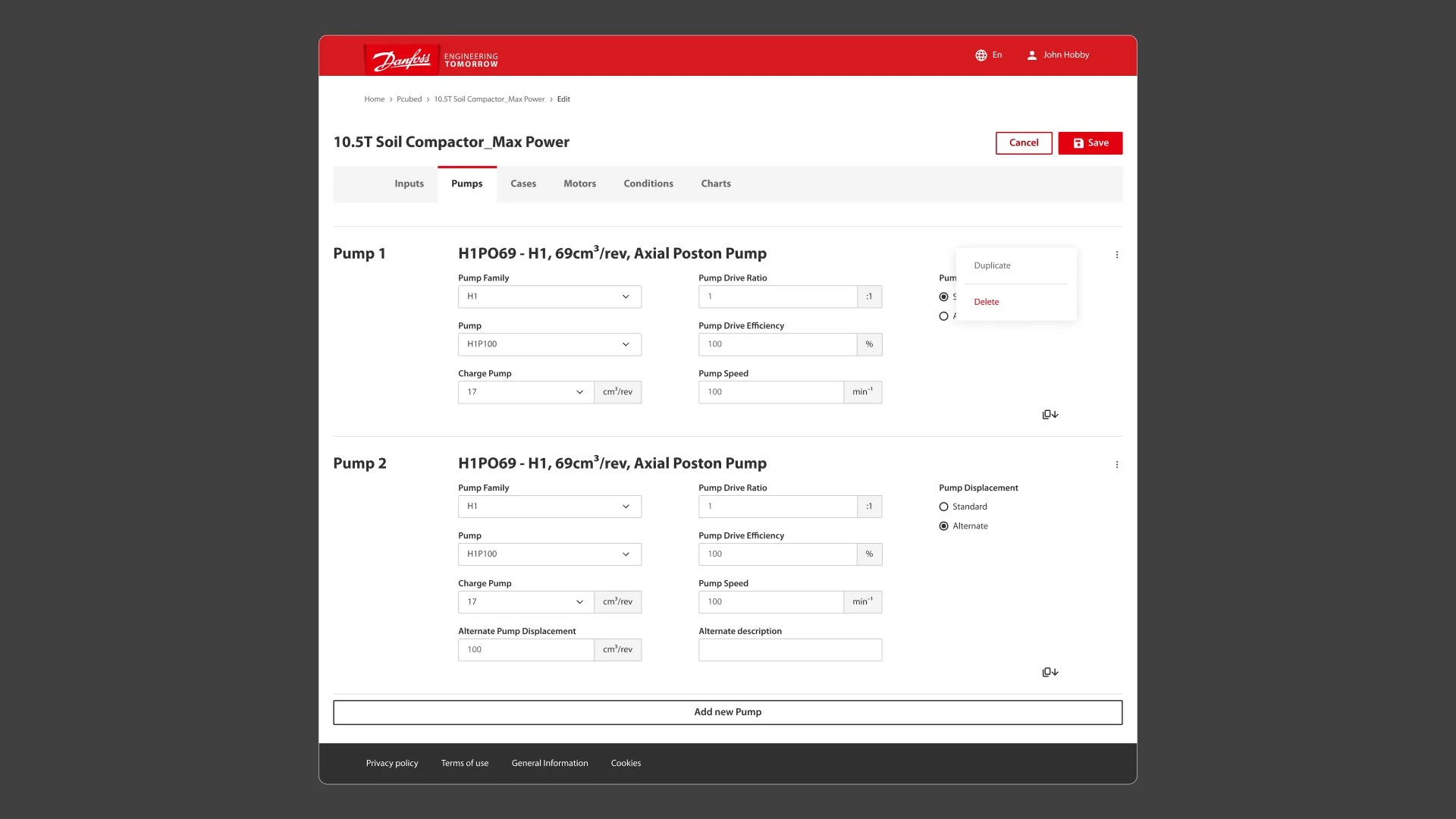
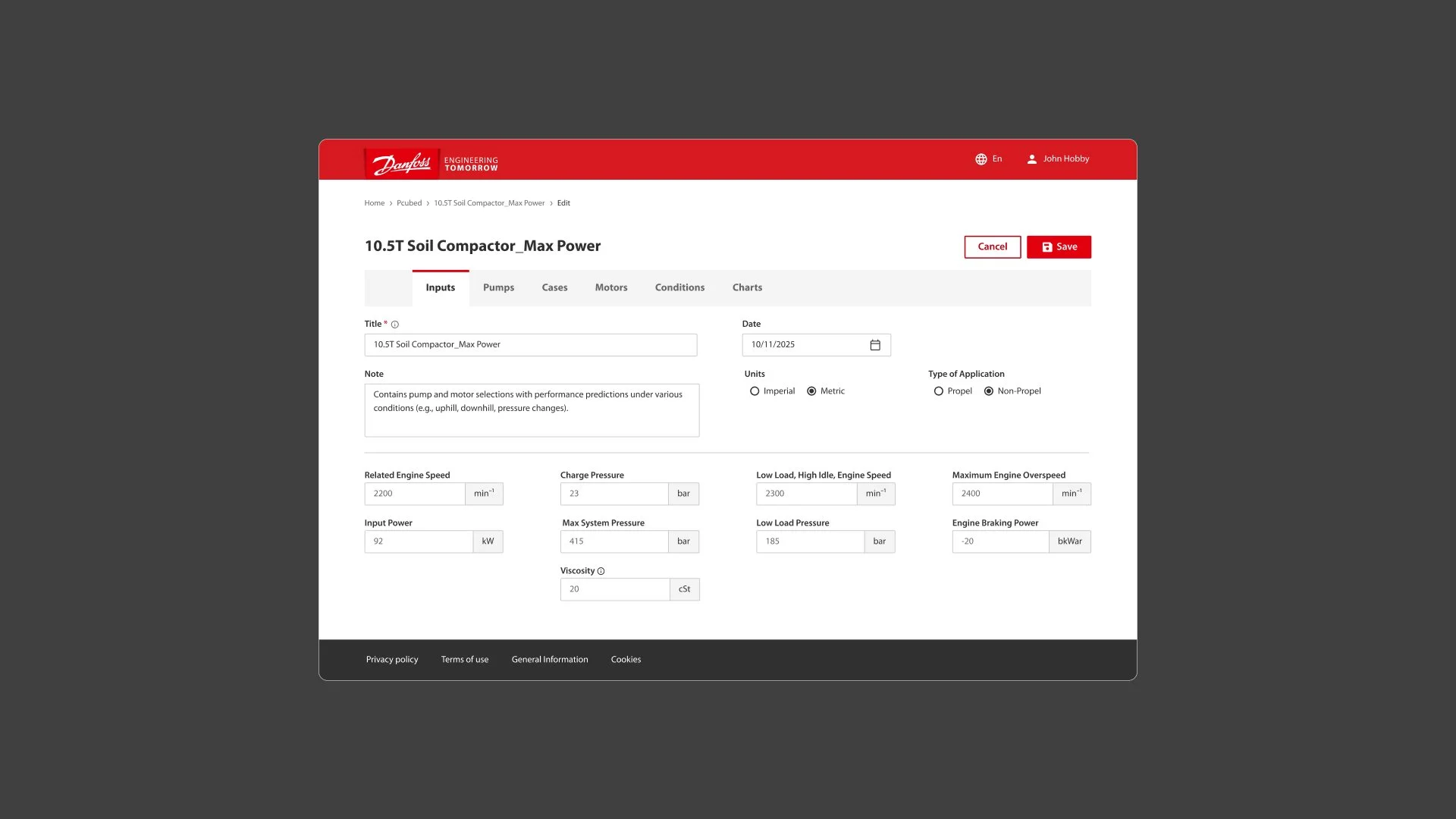
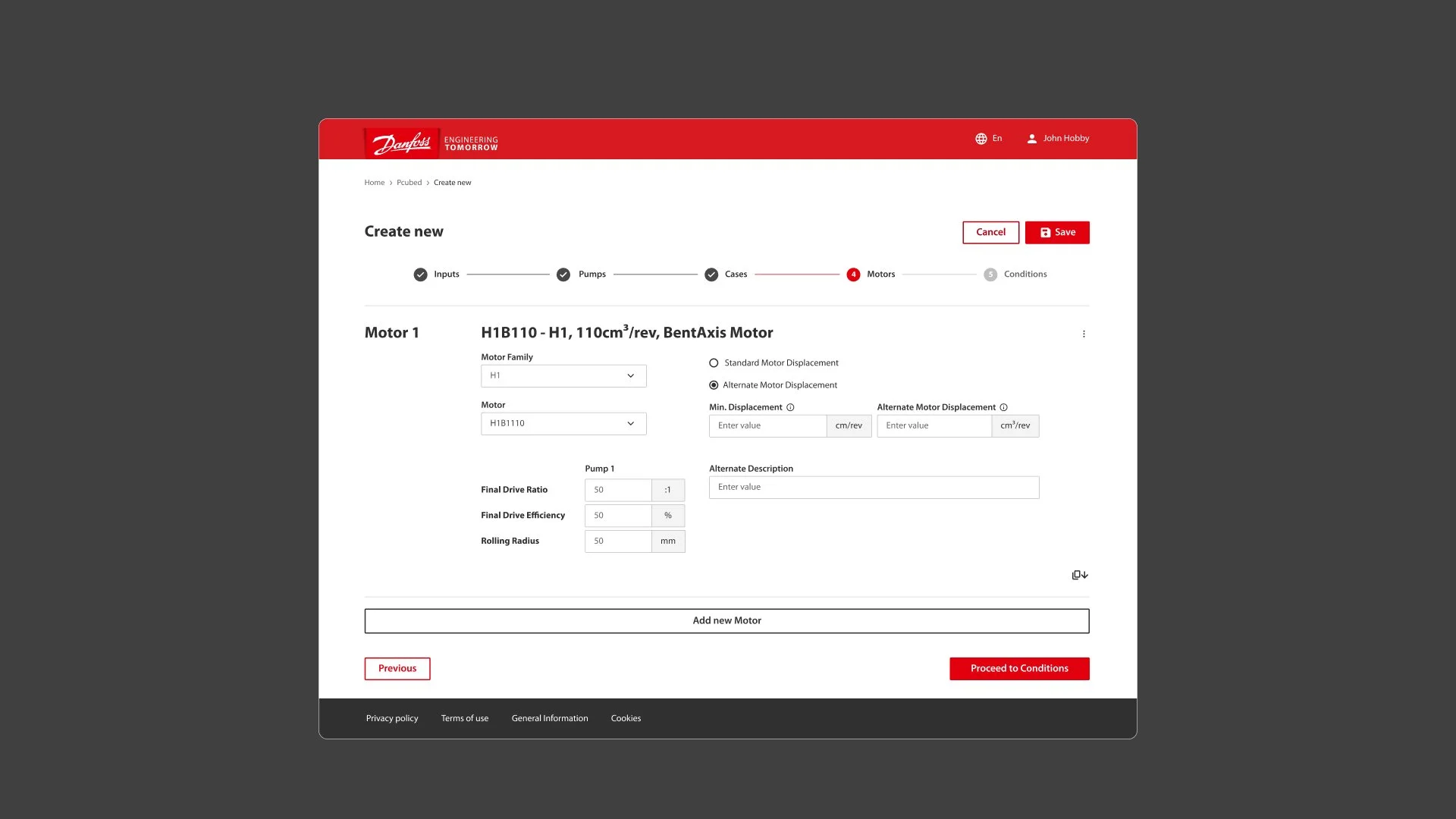
The workflow was restructured into a clear stepped progression: Inputs → Pumps → Cases → Motors → Conditions → Charts. This progression indicator always remains visible, showing engineers exactly where they are in the configuration process and what steps remain. Each step focuses on a single configuration aspect, reducing the cognitive load of managing multiple technical parameters simultaneously.
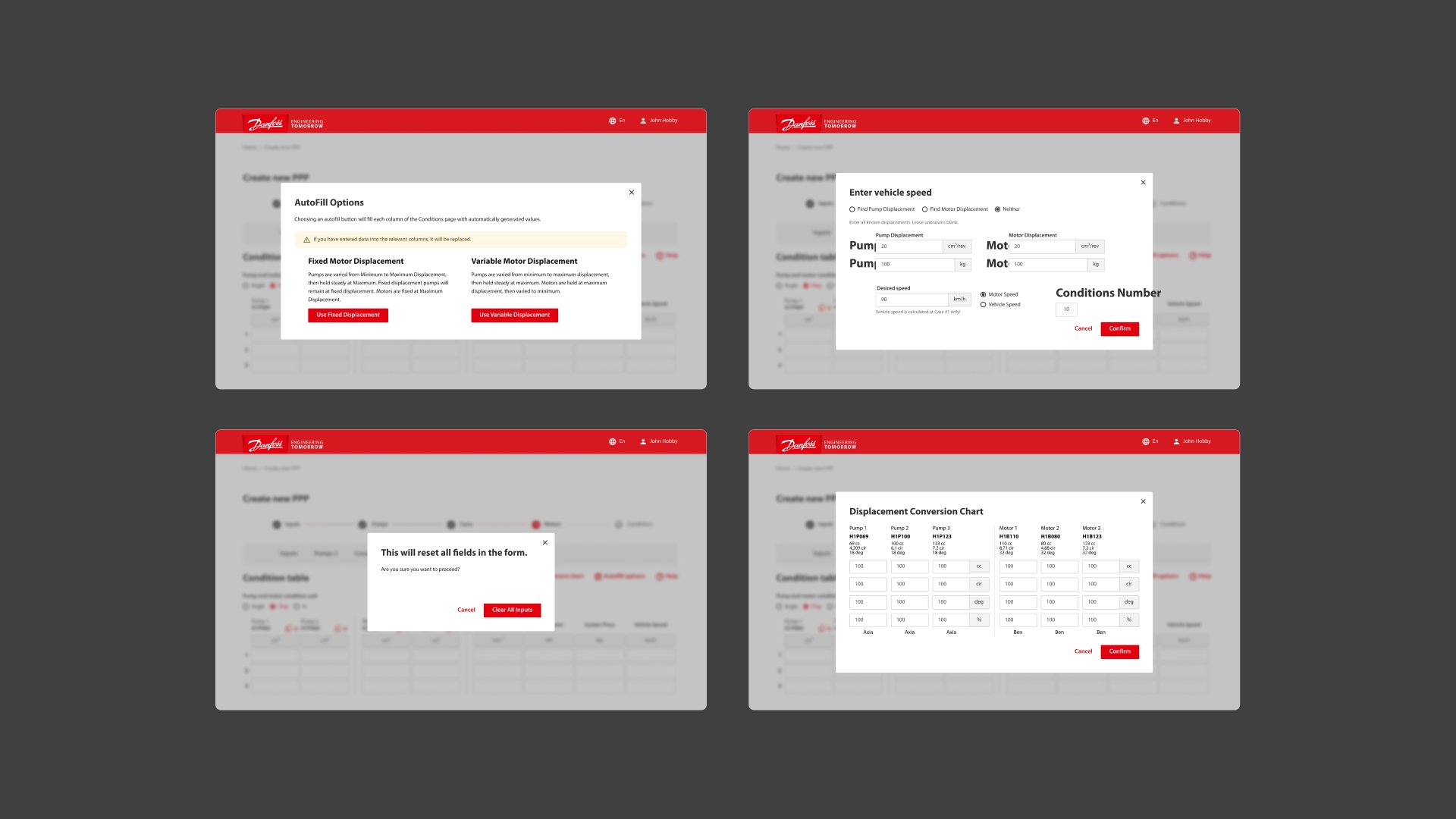
Complex modal interactions were redesigned for clarity. The AutoFill Options modal presents two distinct pump displacement strategies—Fixed Motor Displacement versus Variable Motor Displacement—with clear explanations of how each affects the calculation. Engineers can immediately understand the technical implications before committing to a choice. Warning messages use appropriate visual weight, ensuring destructive actions like "Clear All Inputs" require explicit confirmation without creating unnecessary alarm.
The Conditions table interface became the most significant design challenge. Engineers need to input pump displacements, motor displacements, input speeds, power values, and system pressures across multiple test cases—potentially dozens of fields per configuration. The redesigned table maintains clarity through consistent column widths, clear unit labels, and helper tools like the Displacement Conversion Chart modal and Vehicle Speed calculator. These modals provide quick access to common engineering calculations without disrupting the main workflow or requiring separate calculation tools.
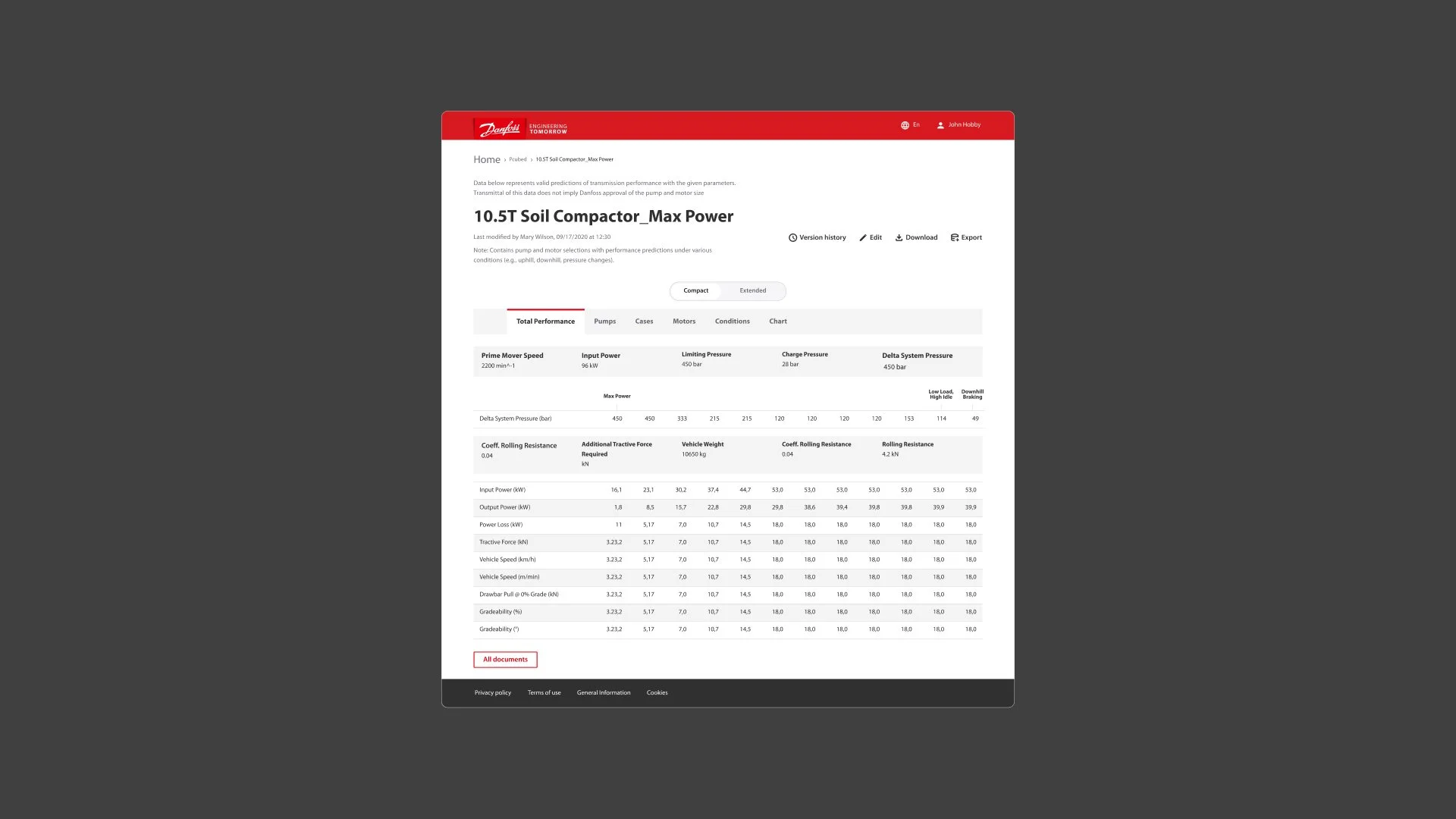
The results view transforms dense performance data into scannable tables with clear hierarchy. Engineers can toggle between Compact and Extended views, switch between performance tabs (Total Performance, Pumps, Cases, Motors, Conditions, Chart), and quickly identify critical values like Prime Mover Speed, Input Power, Limiting Pressure, and system efficiency metrics. Version history, download, and export functions provide the collaboration and documentation capabilities engineering teams require.
THE IMPACT
The redesigned Pcubed aligned Danfoss's specialised engineering tool with their modern design system while preserving the technical depth engineers depend on for accurate transmission performance predictions. The stepped workflow reduced configuration errors by making the process less overwhelming. Modal interactions clarified complex technical choices. The cleaner table interfaces made multi-case scenario comparison significantly faster. By modernising the visual presentation without sacrificing functionality, the redesign ensured Danfoss engineers could continue using their trusted performance prediction tool with improved efficiency and reduced friction in their daily engineering workflows.