Kameo Crowdfunding Platform Redesign

Making real estate investment accessible through design

INITIAL STATE

Founded in 2014, Kameo established itself as a Scandinavian fintech platform connecting real estate companies seeking capital with investors looking for alternatives to traditional banking. The platform served two distinct user groups—private investors seeking returns and construction companies needing flexible financing—but the experience felt dated and disconnected from the sophisticated financial services it was providing.

The interface suffered from complex user flows that created unnecessary friction in what should have been straightforward investment decisions. Visual identity felt generic, failing to communicate the credibility and professionalism that defined Kameo's actual market position. For users like Sara, a teacher from Göteborg who wants her savings to work harder through low-risk investments targeting up to 9% returns, the platform didn't inspire the confidence needed to commit significant capital. For users like Peter from GreenPro Construction seeking supplemental project financing, the experience felt transactional rather than partnership-oriented. The gap between Kameo's market maturity and their digital presence had become increasingly apparent.

THE ASK

Kameo needed a complete platform redesign that would reflect their established market position while simplifying the investment experience for both user groups. The challenge was creating an interface that made real estate investment feel accessible to private individuals without diminishing the sophistication that corporate users expected. The solution needed to reduce friction in user flows, establish a visual identity that communicated trust and credibility, and work seamlessly across both the public-facing website and the authenticated web application where users managed their investments.

The project ran parallel to an external rebranding effort conducted in phases, adding complexity to the design process. Brand guidelines were intentionally minimal, giving me both creative freedom and responsibility to extend the identity system in ways that would serve the digital experience. My role spanned interaction design and visual design across the entire platform, working as part of a cross-functional team alongside the product owner from Zwebb and the internal Kameo team.

SOLUTION & DESIGN APPROACH

I approached the redesign by first understanding the fundamental differences in how each user group engaged with the platform. Investors needed to quickly evaluate opportunities, compare projects, understand risk profiles, and feel confident in their decisions. Construction companies needed to present their projects compellingly, track funding progress, and manage relationships with multiple investors. These distinct needs required separate but complementary user flows that shared a cohesive visual language.

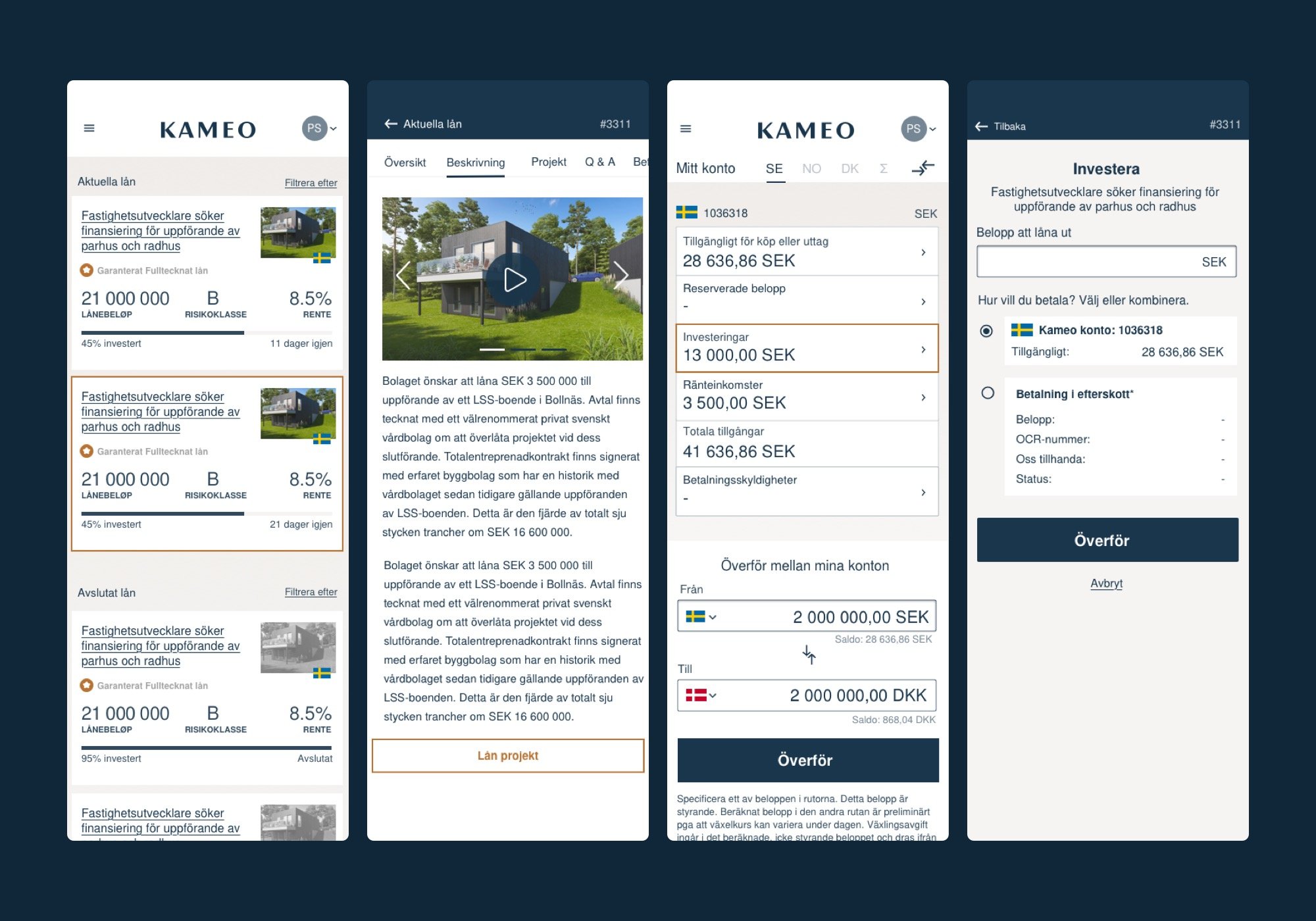
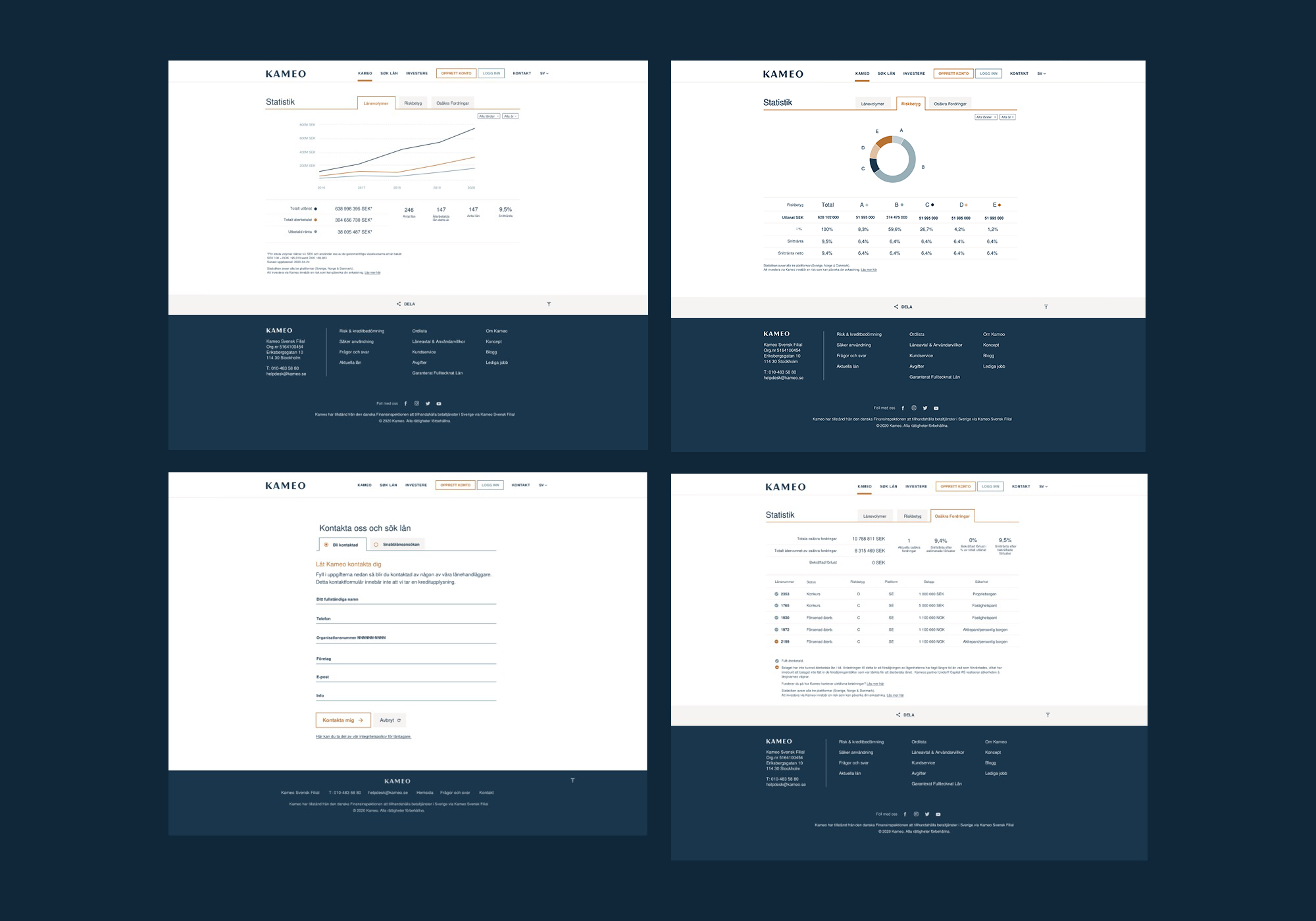
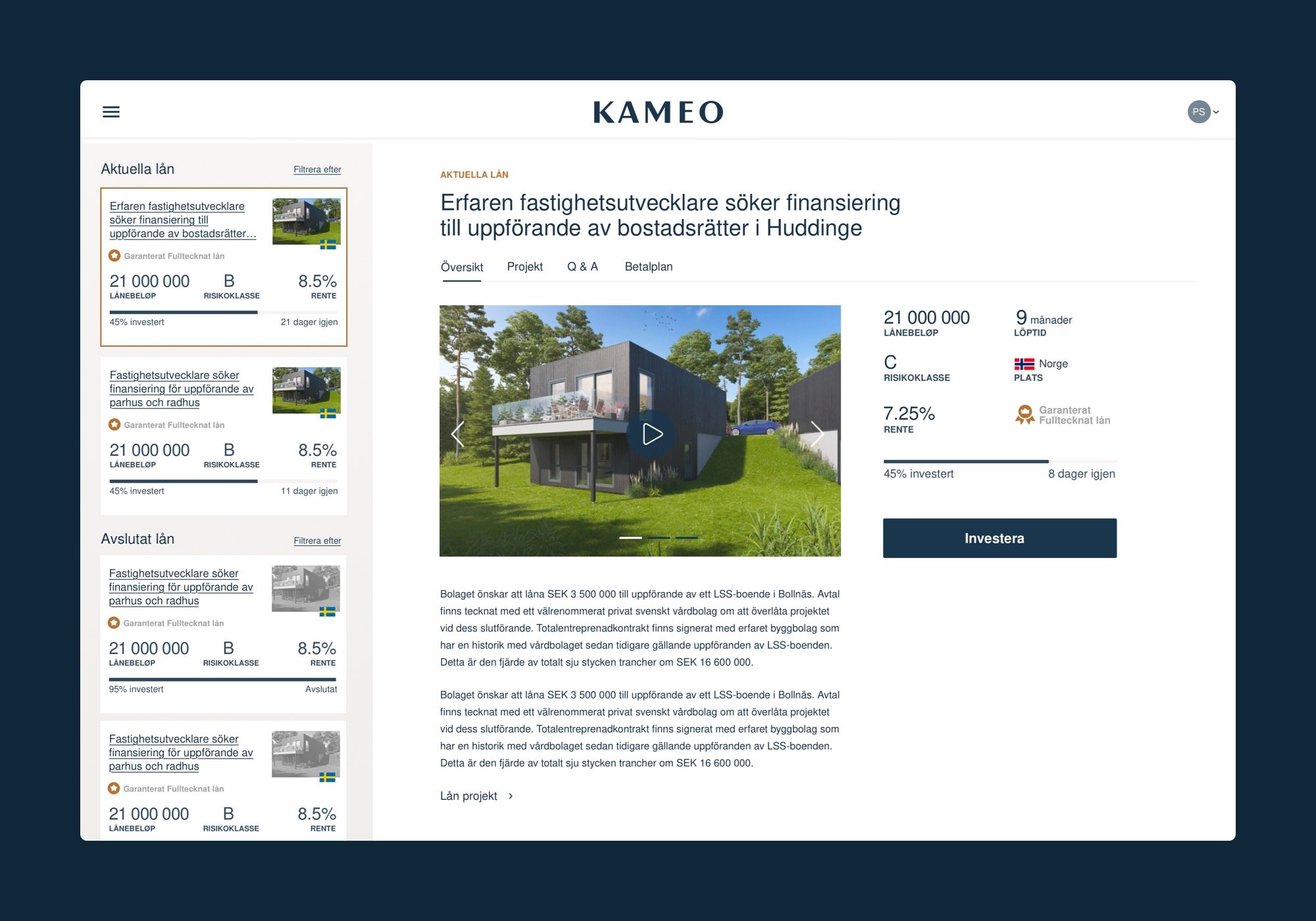
The website redesign focused on clarity and accessibility. Investment listings were restructured to surface critical decision-making information immediately—expected returns, risk levels, project timelines, and funding progress. Individual project pages balanced detailed financial information with compelling storytelling about the developments themselves, recognizing that real estate investment carries both rational and emotional components. Users needed the numbers to make informed decisions, but also the context to understand what they were actually investing in.

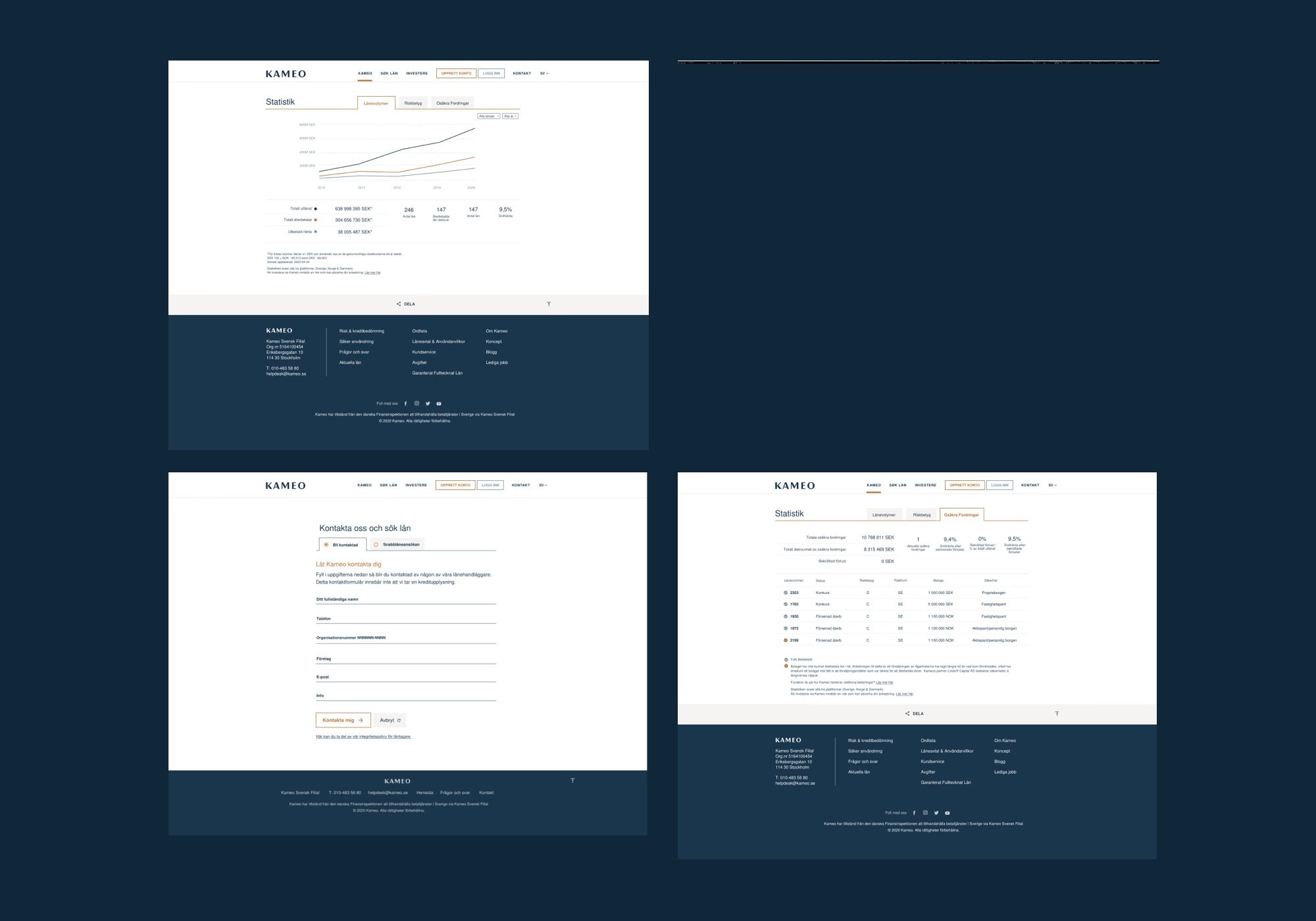
For the visual identity, I developed a sharp, angular design language that conveyed precision and confidence. Typography choices emphasized clarity and professionalism, while a carefully extended color palette provided hierarchy without overwhelming the interface. The angular visual system became a distinctive element that differentiated Kameo from competitors while supporting the functional requirements of complex financial information display. Clean layouts and generous whitespace ensured the platform felt sophisticated rather than cluttered, even when presenting dense project data.

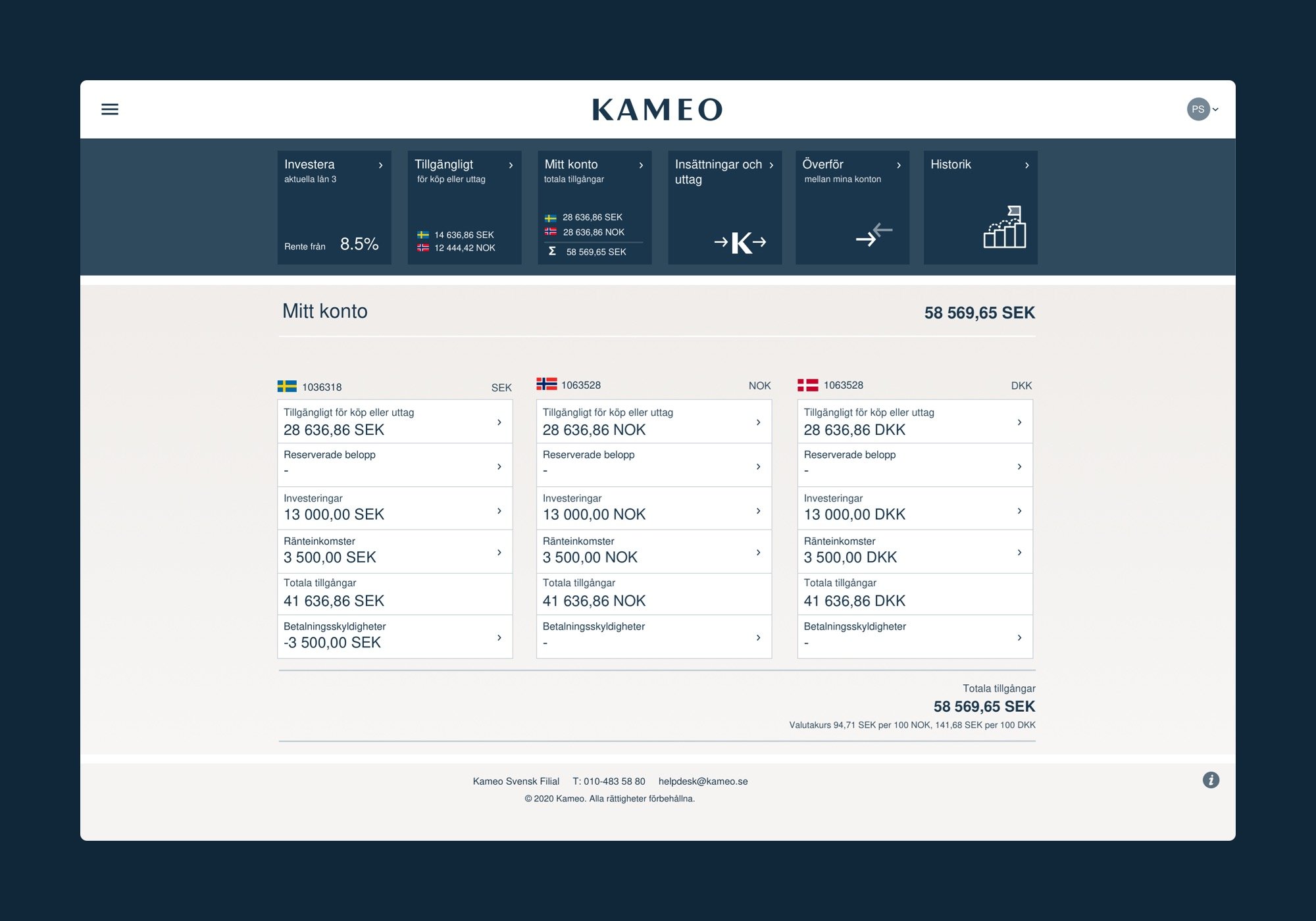
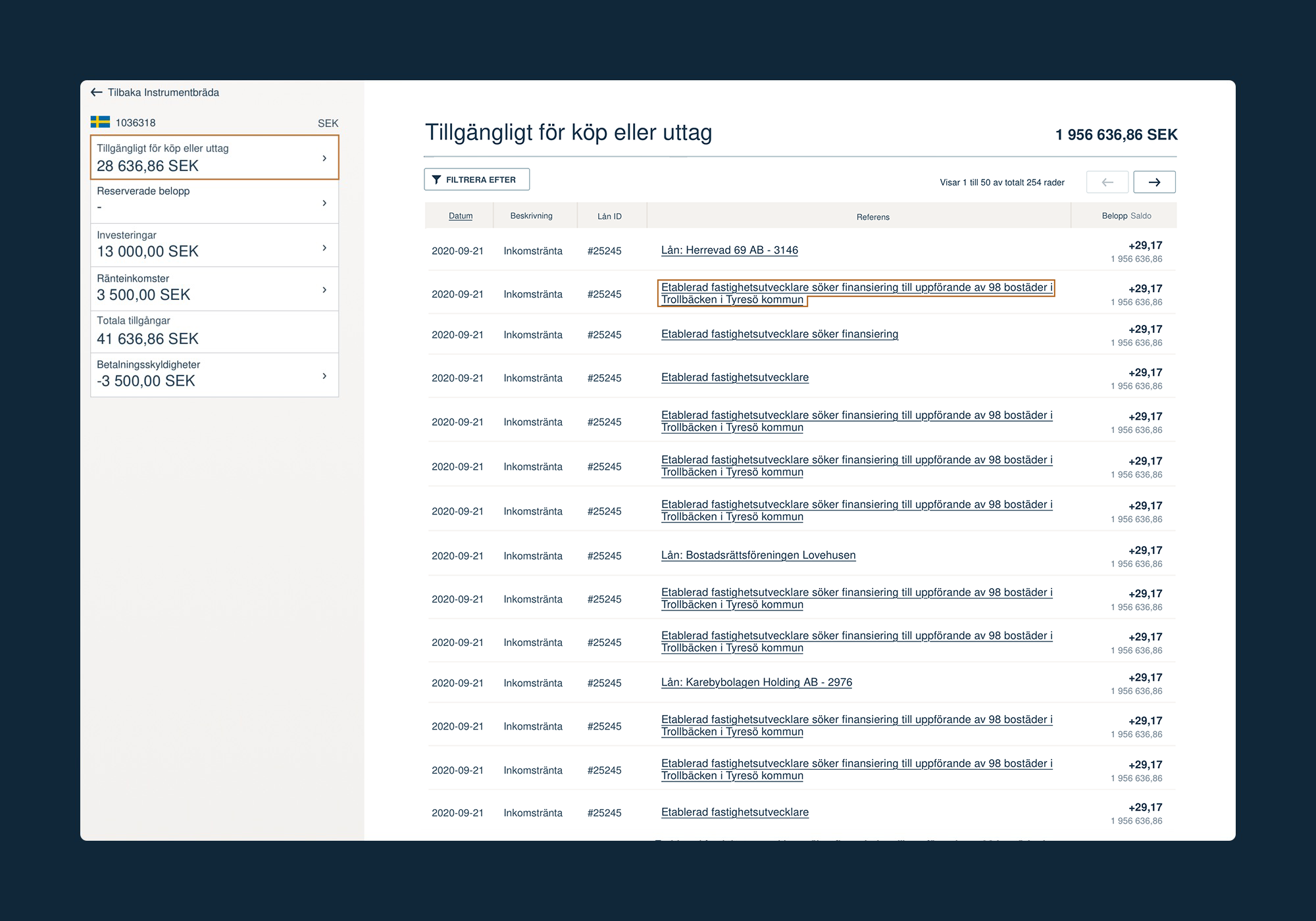
The web application extended this foundation into the authenticated experience where users managed their investment portfolios. Beyond simply applying the new visual identity to existing functionality, I introduced advanced analytics features that hadn't existed in the previous platform. Investors could now track performance across multiple projects, visualize portfolio diversification, and monitor upcoming payment schedules. Construction companies gained better visibility into their funding sources and investor relationships. The interface maintained the sharp, precise aesthetic established on the website, creating a seamless transition from discovery to active investment management.

OUTCOMES & REFLECTION

The project culminated in a comprehensive redesign that addressed every identified friction point and established a distinctive, credible visual identity. The proposed solution demonstrated how thoughtful design could elevate Kameo's digital presence to match their market maturity. However, the reality of organizational decision-making intervened in ways that no amount of design excellence could overcome.

Senior leadership ultimately decided against implementing the identity change. Their reasoning was pragmatic: if the current platform performs adequately from a business metrics perspective, there's limited urgency to invest in evolving it. The site retained its original appearance with only minor functional adjustments. While disappointing from a design perspective, this outcome provided valuable lessons about the realities of design work in established businesses.

Even the most compelling design proposal requires alignment at the highest levels of leadership. Stakeholder buy-in, particularly from decision-makers who control implementation resources, is as critical as the design quality itself. In retrospective, the project might have benefited from earlier engagement with senior leadership to build understanding of how design evolution supports long-term business positioning, not just immediate performance metrics. The gap between "working adequately" and "working optimally" often feels abstract to stakeholders focused on quarterly results rather than competitive differentiation.

The experience reinforced that design exists within organizational contexts where decisions balance multiple factors beyond user experience and visual quality. Understanding these dynamics and building advocacy for design investment throughout the decision-making chain is as essential as the craft itself. Sometimes the most important design work happens not in Figma, but in the meetings where we make the case for why evolution matters even when things are "working fine."

Previous
Previous

Sierra

Next
Next

Favorit SPA